Steps to enable backtrace links
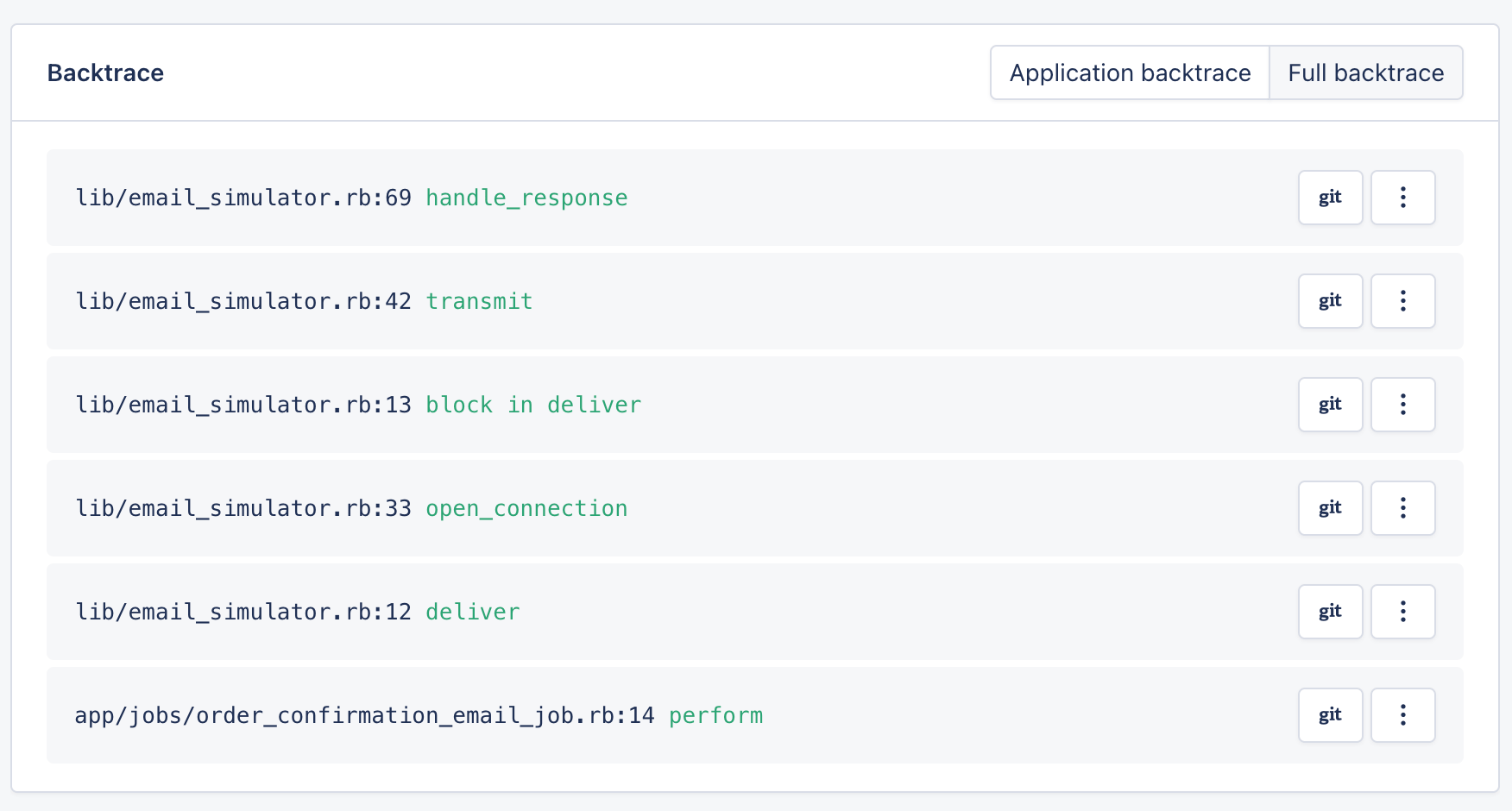
To enable backtrace links an app on AppSignal.com needs to:- This will allow AppSignal to link to the specific revision of the source code in which the error occurred.
- Configure the “repo url” for an application, or link your organization to GitHub, so AppSignal knows where to link to.
- See the steps below for either option.
Configure the repo url
Owners of an Organization can specify a Repo url on the app settings page. This is especially useful for Git hosting platforms AppSignal has no integration for (e.g. BitBucket) or private repositories.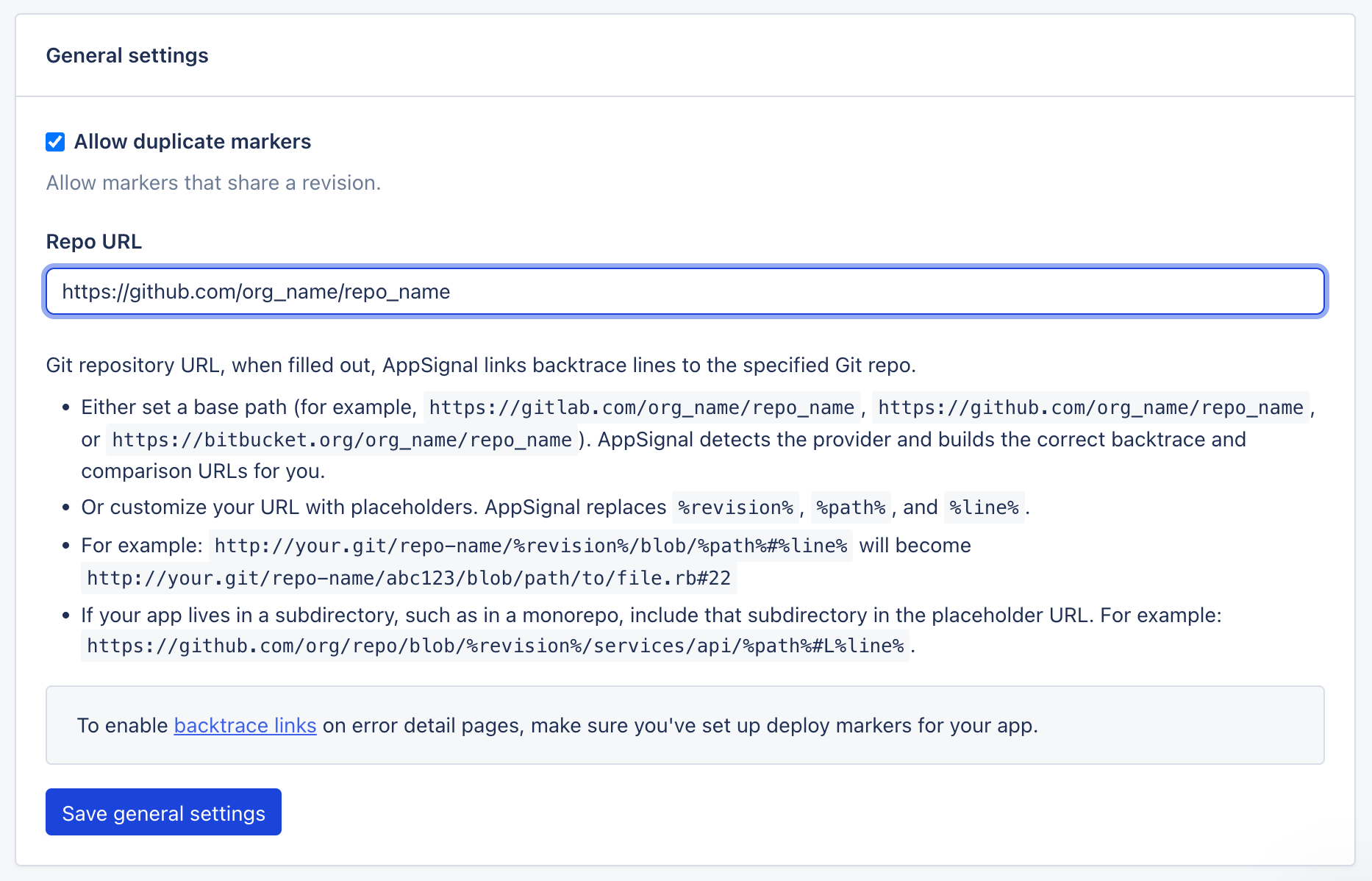
Link your app to GitHub or GitLab
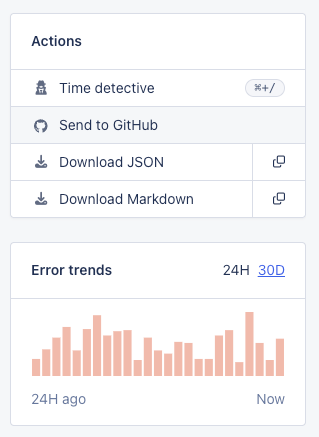
Alternatively organization owners can link an app to GitHub and the “repo url” from the selected repository will be stored automatically. With the GitHub integration you’ll also be able to send incidents to GitHub directly from AppSignal. The GitLab integration stores the “repo url” the same way, and also lets you send incidents to GitLab as issues. Once the steps are completed we’ll automatically enrich the backtrace lines with a link to the correct revision/file/line on the specified Git repository.Send error to GitHub
When an error occurs, AppSignal will not create an issue automatically on GitHub, if you think it is an error that needs to be fixed then you can create this error as an issue in GitHub by clicking on the “Send to GitHub” button.